Problem one: Why doesn’t Siemelle have a copy of The Strange Case of Dr. Jekyll and Mr. Hyde?
Solution: Purchase Book.
Done.
Problem two: Siemelle owns 1.7 million books and may get distracted by all the pretty colors and the promise of all those enemies-to-lovers tropes.
Solution: Siemelle reminds herself that she is trying to write more this year and, since her mind is irrational, if she fails to follow the simple task of reading a book and writing about it on a blog she swore to not abandon, she is likely to fall into “loser” mode and catastrophize her entire life. Read the book.
Done.
Problem three: Now that said book has been read, what does she say about it that hasn’t already been said through literary papers, film, music, etc.?
Solution: Anything she wants to say about it.
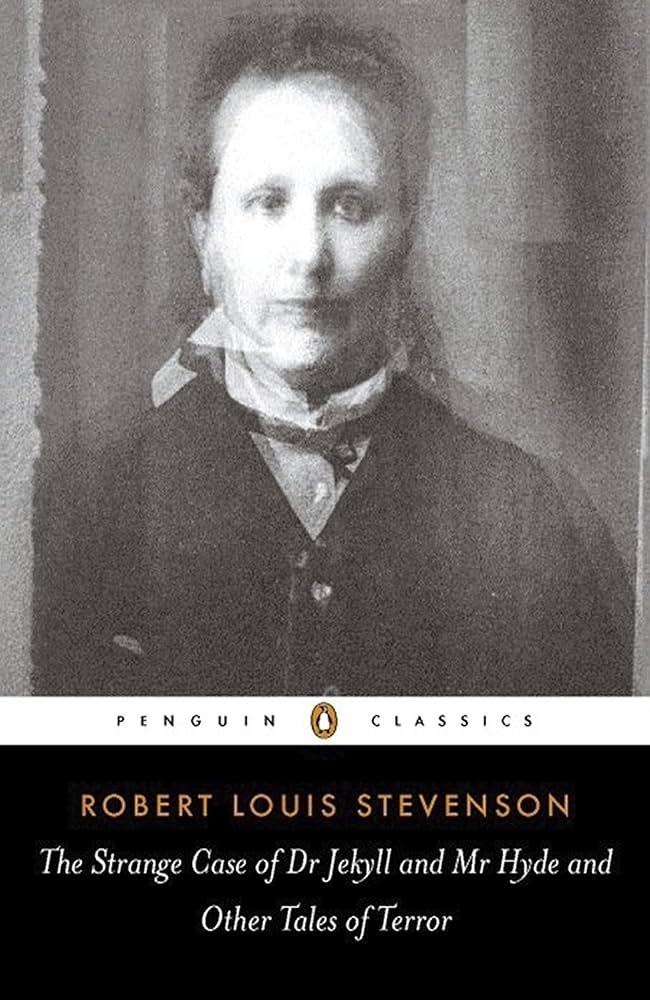
So, I officially finished reading The Strange Case of Dr. Jekyll and Mr. Hyde by Robert Louis Stevenson about two weeks ago. In that time, I’ve been stewing over what I should say about it. The fact is, anyone can do a deep dive into this story and pull out better-written, literary dissections of the text as it relates to the obvious – Victorian society and repression. Clearly, that’s not who I am. So, I’m just going to give you a brief rundown of the story as I understood it.
The story’s narrator is…
…
…
…
…
Gabriel John Utterson.
I betcha you thought I was going to say Dr. Henry “Harry” Jekyll, didn’t you? I built it up with multiple ellipses and everything. It was very, “and the winner is…”, wasn’t it? Anyway, Mr. Utterson is a lawyer and a good friend of Dr. Jekyll. Mr. Utterson is more than a little worried about Henry because he recently wrote a will stipulating that all his assets and possessions should go to Mr. Edward Hyde.
And Mr. Utterson is like, “DAFUQ is Edward Hyde”?
Not only that, but there is a clause in the will where Jekyll details what should happen should he suddenly disappear. Disappear, you say? Surely there is something rotten in the state of Denmark! So, Mr. Utterson said, “Naw, bitch, something ain’t on the up and up”. He, being the good guy he is, decides he needs to investigate! Utterson and Jekyll have a mutual friend in Mr. Enfield, and they are out and about enjoying the city when Utterson asks, “What up with Hyde?” Mr. Enfield responds:
“He is not easy to describe. There is something wrong with his appearance; something displeasing, something downright detestable. I never saw a man I so disliked, and yet I scarce know why.”
This reminds me of Mary Shelley’s Frankenstein, in a way. If I am recalling correctly, there was a theme throughout Frankenstein that anyone who happened to come across Frankenstein’s creation was assaulted by a sense of something being… what? Inhuman, more than human, a combination of many humans? This same theme was seen in this text as well, but, in Hyde’s case, those who came across him alluded to dislike, fear, or as if there was something exuding from Hyde that was not “good”. Yes, Hyde is described as having an “impression of deformity without any nameable malformation” (an issue and discussion for another time), but it felt deeper than the physical (again, so many issues that I’ll expand upon in another post). Those who come across Hyde are immediately unsettled by him.
Make no mistake about it, though, they have every right to be fearful of Edward Hyde. The first story we hear centered around him, the guy damn near tramples a child while walking, and was going to walk away while the child was crying and causing a fuss! Our friend Utterson decides to go and find this Edward Hyde. He glimpses him one night and, sure enough, he gets the same strong feelings of dislike for Hyde as everyone else!
After some investigation, Utterson says, “Like, I need to speak to Henry because I’m not going to board this sinking ship.” So, he approaches Dr. Jekyll and he’s more than a little evasive about who Edward Hyde is and why he’s hanging around. His words to Utterson are:
“I will tell you one thing: the moment I choose, I can be rid of Mr. Hyde.”
Naturally, I have been underlining passages in the book, tabbing, and making comments. My comment: Can you though?
Are we sure about this? Are we absolutely, 100% sure that if you want to separate from Mr. Hyde, you are the one who’ll be rid of him? Do you have any control over what is happening right now? Be for real!
But I know the story, so I can ask these questions!
Since the story is on the shorter side, I’m not going to break it down any further in case you want to read it. Here is what I will say – Dr. Henry Jekyll didn’t have control over shit, and there was only one way this could have ended. So, in a way, Dr. Jekyll was correct. Which is pretty damn dark and bleak, if you ask me.
Here is what I really enjoyed about reading this book:
- Yes, it does look at repression in Victorian society, but there are other underlying themes here. The obvious is good vs. evil or “playing God”. However, you can’t read this story without also considering other areas: nature vs. nurture, science vs. religion, mental health, etc. These are all strong discussions you can have during your next book group. Or, you know, Emily Henry’s last book is fun, too! (Not even a diss, I love Emily Henry and she has a lot happier reads!)
- The length was, somehow, perfect. It can be intimidating to read what is considered classic literature (I’m looking at you, Dickens). This was just long enough for the heart of the story not to be pushed down under language/prose that are too heavy.
- It’s just so interesting to me. I am genuinely and completely fascinated by this story.
What frustrated me about this story:
- I want to know why. That is the one thing that Stevenson doesn’t delve into – what was the catalyst for Dr. Henry Jekyll to start experimenting and, once there was even a hint at Hyde doing awful things, why didn’t he discontinue this experiment? When did he realize that he lost control?
- The language used to describe Hyde and aligning the way he looked (see above) with something bad. I get that this was written in a much different time period, but it still made me uncomfortable. I have more thoughts on this, but I want to watch a few films to see how they approach the differences between Jekyll and Hyde before I delve any further.
Just those two frustrating things! The two things that prompted me to give The Strange Case of Dr. Jekyll and Mr. Hyde a 4/5 stars.
With the source material conquered, I can now start my film journey.
Don’t envy me the research I’m going to have to do to find what films were both directly and indirectly inspired by this story.
Until then.
Siemelle
 All Fauxn Up
Leave a comment