Versus

Ain’t no one got time to write a long-winded review. I watched the 1931 version of Jekyll and Hyde. Everyone, by now, knows the general story. Aside from the fact that we have moved into talkie territory, not a whole lot changed between 1920 and 1931. So, we’re going to force them to fight. Whoever has the most points at the end is the victor!
BEWARE – THERE MAY BE SPOILERS AHEAD!
Silent vs Talkie
Silent Film – Creepy. Over the top expressions and body movements. Takes talent to convey the story. A lot can be lost without dialogue.
Talkie – Dialogue provides better context. Easier to pay attention. Can be a little too over-the-top when it doesn’t need to be.
Winner – Silent
Barrymore vs March as Jekyll
Barrymore, 1920 – Nice to look at in an old-timey way. Can feel Jekyll’s guilt and remorse. Taken out by self-inflicted violence.
March, 1931 – Nice to look at, as well, in a dapper way. Slightly unbelievable interactions with fiancé. Taken out by a police officer, trying to acrobat his way out of consequence. Do not get the sense he’s at all remorseful.
Winner: Barrymore (silent)
Millicent vs Muriel
Millicent, 1920 (Martha Mansfield) – Forgettable. Not given a lot to work with, really. Good acting choices, even though we don’t see her too much.
Muriel, 1931 (Rose Hobart) – Actually kind of annoying. Given too much to work with for this story. Actress, despite my aversion to the character, is still very good.
Winner – Millicent (by a hair)
Gina vs Ivy
Gina, 1920 (Nita Naldi) – Doesn’t play a major role. Remember her more than the actual love interest. Solid acting. Survives the film.
Ivy, 1931 (Miriam Hopkins) – The acting choice when we first meet her is way too strong. The acting choices get so much better when she starts reacting to Hyde. Does not survive the film.
Winner – Ivy (Justice for both!)
Barrymore vs March as Hyde
Hyde, 1920 – Very creepy. Scary make-up. Don’t want to meet him in a dark alley. Could totally beat the crap out of him. Solid acting, but not as good as Barrymore as Jekyll.
Hyde, 1931 – Completely unhinged. Borderline offensive (or, maybe, just outright offensive) make-up. Not safe for any woman to be in the same room with him alone. In a fight, he’s probably going to win.
Winner – Hyde, 1931
Side Characters
1920 – Could not keep track of who was who, but there was an Utterson. Don’t ask me to identify which one he was, though.
1931 – Could absolutely keep track of who was who, and they supported the main cast well. No Utterson.
Winner – 1931
Rewatchability
1920 – Well-made for the time period. The no-talking thing can get old.
1931 – Some interesting shots in the beginning utilize Jekyll’s POV. There is some definite over-acting sprinkled through the film, which works for Hyde, but not so much for Jekyll. Talking makes the story more accessible.
Winner – 1931
The Winner
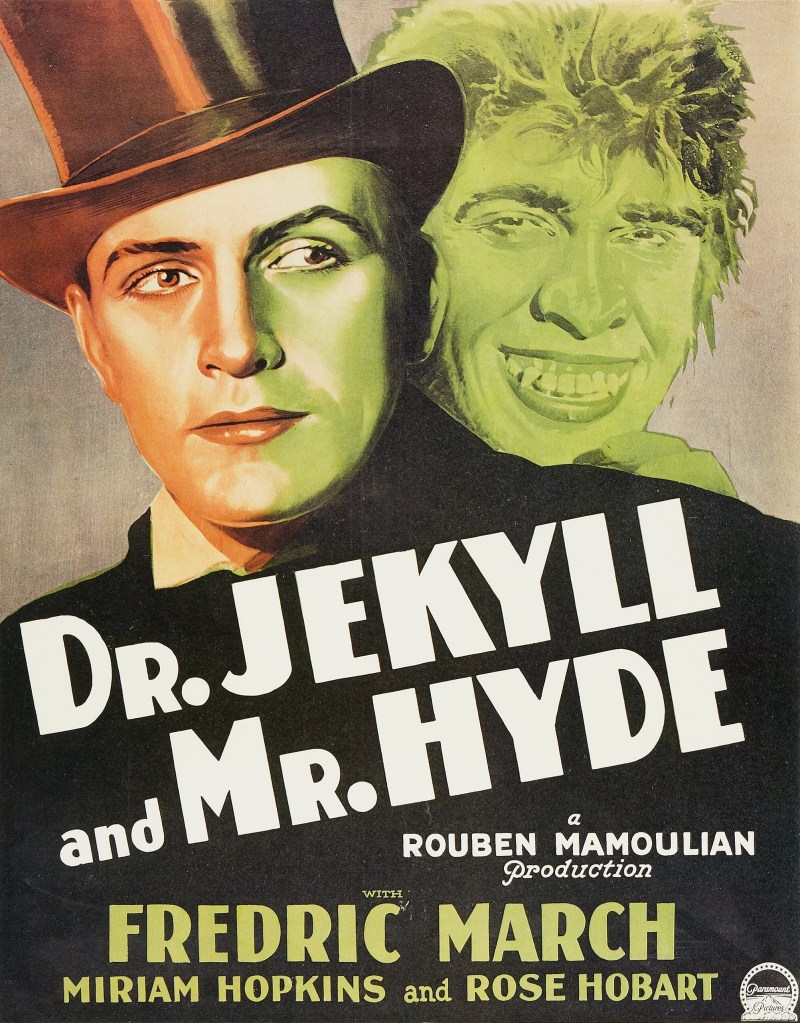
Both films are very solid entries. If I had to choose which one is more iconic, I would say the silent version because it sets the tone. However, there is something to be said about the 1931 version. It’s easier to understand. It’s immediately more accessible just by being a talkie. I will say I am not a fan of Hyde’s makeup effects, but March’s completely unhinged, over-the-top portrayal makes me so uncomfortable that it’s hard not to lean toward this version. March as Hyde sells the story.
Also, how did they get away with this overtly sexual content (for the time) in 1931?
On to the next!
Siemelle


Leave a comment